Posts

Light boxes (30/09/20)

Image
Light boxes Do you ever notice a dip in your mood as you enter the Autumn months? It’s common to be affected by changing seasons or to have times when you feel more or less comfortable. You might find you have less or more energy when it’s colder or warmer, or you might notice changes in your sleeping or eating patterns. Seasonal Affective Disorder (SAD) is a type of depression related to the change in seasons. People with SAD might experience some of the signs and symptoms below - it's different for different people, and can vary season to season, so this list is not exhaustive: lack of energy finding it hard to concentrate not wanting to see people sleep problems, such as sleeping more or less than usual, difficulty waking up, or difficulty falling or staying asleep feeling sad, low, tearful, guilty or hopeless changes in your appetite, for example feeling more hungry or wanting more snacks It is thought that SAD is caused by a lack of natural sunlight in the winter months. Light...

"The Work" (23/09/20)

Image
"The Work"     When I first began my wellness journey about six years ago, mindfulness taught me that through meditation, I could separate my thoughts from reality. I discovered that I could notice thoughts as they entered my mind, observe them and let them go. This was completely revolutionary to me - how could my thoughts not be ‘me’? I create them, surely! Mindfulness is about recognising that yes, we create our thoughts, but our mind does this on autopilot as we go about our daily lives. If you are experiencing a negative situation, you might find that your mind throws up similar situations from your past in attempt to ‘solve the problem’. This can make you feel worse, and so the mind throws up more negative thoughts and so on. Mindfulness is about recognising unhelpful thoughts and letting them go before they become consuming.  Practicing mindfulness meditation is not surprisingly, great for your mental health (apps  Calm  &  Headspace  are a ...

Ikigai (16/07/20)

Image
"ikigai"   This week as we welcome our new students, I'm thinking about the Japanese concept of ikigai and how as educators, we have a role in helping our students to find their purpose in life. ikigai means 'a reason for being' and is seen as the convergence of four elements:   What you love (your passion) What the world needs (your mission) What you are good at (your vocation) What you can get paid for (your profession)   University is an opportunity to foster all of these things in our students. We want them to find their purpose in life at Salford and provide a nurturing environment for them to achieve their goals.  Discovering your own ikigai is said to bring fulfilment, happiness and make you live longer - Japan has one of the highest life expectancies in the world, so there must be something in it!    If you want to find your ikigai, ask yourself the following questions:  1) What do I love?  2) What am I good at?  3...

The benefits of massage (09/09/20)

Image
This week  Charlotte Park , a  Demonstrator in Sports Rehabilitation at our Salford Sports Injury Clinic talks about the benefits of massage for self-care and wellness: Mobilising and massaging joints and muscles can greatly benefit people from all walks of life - you don’t need to be 'sporty' to have a sports massage! Soft tissue therapy can accelerate the recovery of exercise induced muscle soreness and also help sooth pain and reduce swelling after injury. The relaxation brought about from soft tissue therapy can help reduce ongoing stress levels and consequently improve your mental health. The University of Salford Sports Injury Clinic has now reopened for face-to-face appointments. We have maintained many of our services virtually during lockdown and have continued to provide musculoskeletal screening, postural  assessment, Injury prevention programmes, rehabilitation prescriptions and fitness education to our on-line patients. However, there can be no ‘virtual’ repl...

COVID-19 – a time of transition? (25/08/20)

Image
  Over the past 6 months, we have been through so much change and uncertainty and of course, it is not over yet. Slowly, we are beginning to adapt to ‘the new normal’ – it doesn’t seem as strange any more to see supermarkets and hospitals full of people wearing face coverings, it may now feel more normal not to hug our parents or vulnerable relatives and friends and to socialise in smaller groups. During the pandemic, we may have introduced positive lifestyle changes and even enjoyed the slower pace of life. As we near the reopening of schools next week, there is a sense, or a hope at least that this will signify another step towards regaining life as we once knew it. We are definitely in a time of transition, as individuals, as families, as a country and as members of a University community. But what impact has the pandemic had on our life stories?   In his recent NY Times Bestseller  How to Master Change , Bruce Feiler discusses how major disruptions or ‘lifequakes’ as ...

Sunshine (12/08/20)

Image
This week’s topic is SUNSHINE.    The weather is beautiful this week, and so it seems fitting to focus on the benefits of sunlight to our wellness. Although the risk to our health from the sun is undeniable and we must cream-up for prolonged sun exposure, the World Health Organisation also recommends 5-15 minutes of sunshine on your arms, hands and face twice or three times a week for health benefits. Here’s why:    Sunlight is a natural mood booster  Sunlight lifts our mood by boosting serotonin levels in our body and reduces the risk of Seasonal Affective Disorder (SAD). If you notice a dip in your mood in the autumn and winter months, using an LED sunlight lamp first thing in the morning and around 4pm when light starts to decrease could really make a difference.   Sunlight improves sleep and lowers stress  Sunlight exposure during the day leads to the production of melatonin at night which aids restful sleep and reduces stress responses in the body...

Self-care (29/07/20)

Image
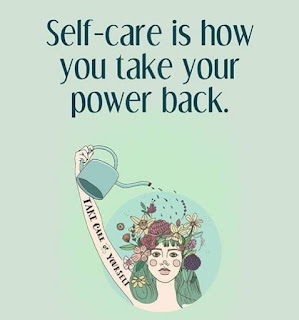
Self-care is any activity that we do with the intention of looking after our wellbeing – whether that be our mental, emotional or physical health. Psychologist Agnes Weinman defined self-care as ‘something that refuels us rather than takes from us’ – ultimately it must be an enjoyable activity that you do by choice and has a positive impact on your mind and body. Often, in our busy lives it is the last priority on a long ‘to do list’ – it’s so easy to put other’s expectations of us before looking after ourselves. The reality is, if we don’t take good care of ourselves, then we aren’t in the best place to care for our loved ones, and strive in other areas of our life, and our wellbeing can be affected. So what does self-care mean to you? For me, it’s taking the time on a daily, weekly and monthly basis to do things that make me feel good and it is essential for my mental wellbeing. I have definitely experienced a time in my life where I wasn’t making any time for self-care (as a new m...